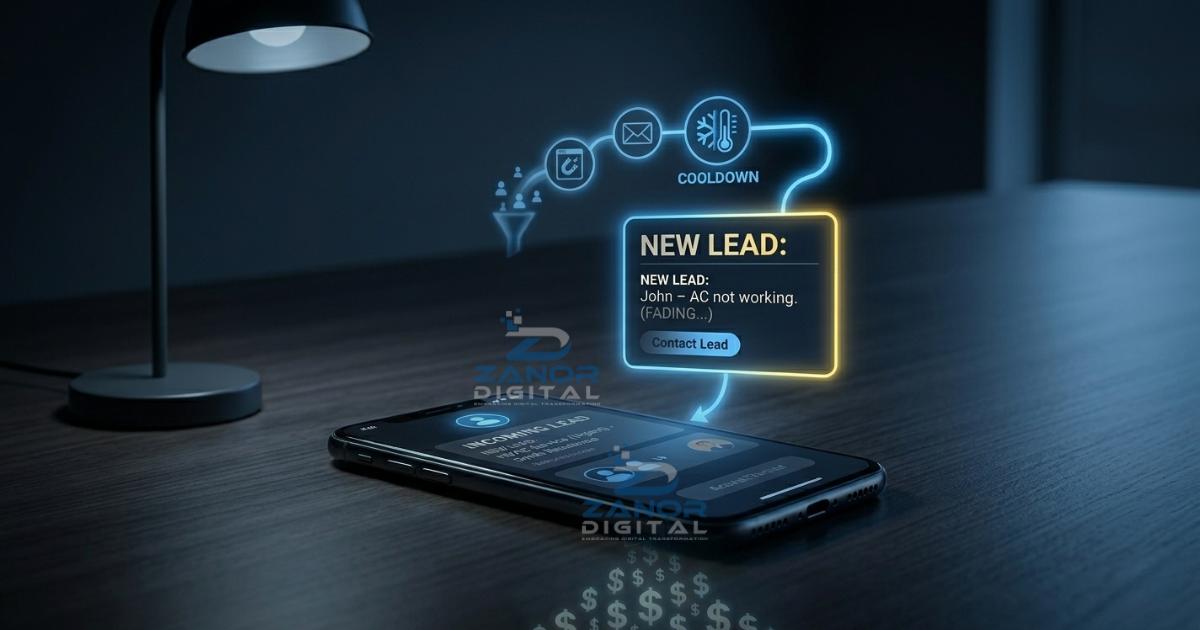
You have good leads coming in. Your ads are running, your Google profile is active, the phone rings. But when you look at how many of those enquiries actually turn into booked jobs, the numbers do not add up.
Here is the honest answer: the problem is not your leads. It is the window between “they enquired” and “you responded.” That window is shorter than most business owners think, and every hour it stays open, revenue walks out through it.
This guide explains exactly why leads go cold, when it happens, and what it costs a typical service business every month.
Why Do Leads Go Cold? The Short Answer
Leads go cold for one reason: the window of intent closes.
When someone picks up their phone to search for an HVAC technician, a real estate agent, or a med spa, something prompted that action. A broken unit. A house they want to sell. An appointment they keep putting off. That moment of motivation is the window. It is real, it is urgent, and it closes fast.
By the time you respond, one of four things has usually happened:
- A competitor already picked up
- The urgency has faded
- Life got in the way and they forgot
- They decided to wait it out
None of these are permanent losses on their own. But most service businesses have no system that fights against them. So leads disappear quietly, month after month, without anyone knowing how much is leaking.
The Four Stages Where Leads Go Cold

Understanding when leads go cold is as important as understanding why. Each stage has a different cause, and a different fix.
Stage 1: The First 5 Minutes
This is where most revenue disappears, and almost no business owner knows it.
Research published in the Harvard Business Review, based on 100,000 sales interactions conducted by MIT researchers and InsideSales.com, found that companies contacting leads within one hour were nearly 7 times more likely to qualify the lead compared to those who waited even an hour longer.
But the real drop-off happens in the first few minutes, not the first hour.
Here is why. When someone fills in a contact form at 7:30pm on a Tuesday, they are not your only option. They just searched Google. Your listing was one of several results. In many cases, they contacted two or three businesses in the same five-minute window.
The first business to respond captures the conversation. The rest get a polite “we already sorted it, thanks” — or nothing at all.
Speed is not a courtesy in this business. It is the single biggest conversion lever you have.
Stage 2: The Overnight Gap
The second stage is the one that kills service businesses slowly.
A lead comes in at 8:45pm. Nobody sees it until 9am the next morning. That is a 12-hour gap. According to InsideSales.com research, 50% of buyers have already chosen the vendor who responded first. And the Harvard Business Review data makes it starker: wait 24 hours, and you are 60 times less likely to reach that lead at all.
Sixty times less likely. That is not a marginal drop-off. That is your chances going from possible to nearly zero, because nobody checked the inbox overnight.
Most service businesses have no after-hours coverage. The owner is at home. Admin does not start until 9am. The VA is in a different time zone. The lead moves on while the inbox waits.
This is not a staffing problem. It is a systems problem.
Stage 3: The Comparison Window
Even when you respond within a reasonable time, there is a third reason leads go cold: you are one of several options being evaluated simultaneously.
When a prospect contacts two or three businesses for the same job, they are running a silent comparison. The comparison is not purely about price. It is about who felt most responsive, most organised, most available. The first business to send a message, include a booking link, and follow up consistently shapes that perception before a single real conversation has happened.
This is where businesses relying on phone calls alone lose ground. A call that hits voicemail, followed by silence, loses to an automated text that says: “We have seen your request. Here are our available times this week.” Every single time.
Stage 4: Life Gets in the Way
The fourth stage is the quietest one, and it happens more than most people realise.
A homeowner enquires about a repair on Monday. Nobody follows up. By Thursday, the urgency has been replaced by adaptation. The leaky pipe has a towel under it. The broken unit has a fan running next to it. The initial frustration that drove the enquiry has faded from “I need this fixed now” to “I will get around to it.”
Without a follow-up sequence that re-ignites the conversation, that lead does not go to a competitor. It just disappears. Not a loss you can track. Just a gap in your calendar that should not be there.
A proper follow-up system catches these leads at Day 2, Day 4, and Day 7 before the window closes entirely.
What Cold Leads Actually Cost Per Month
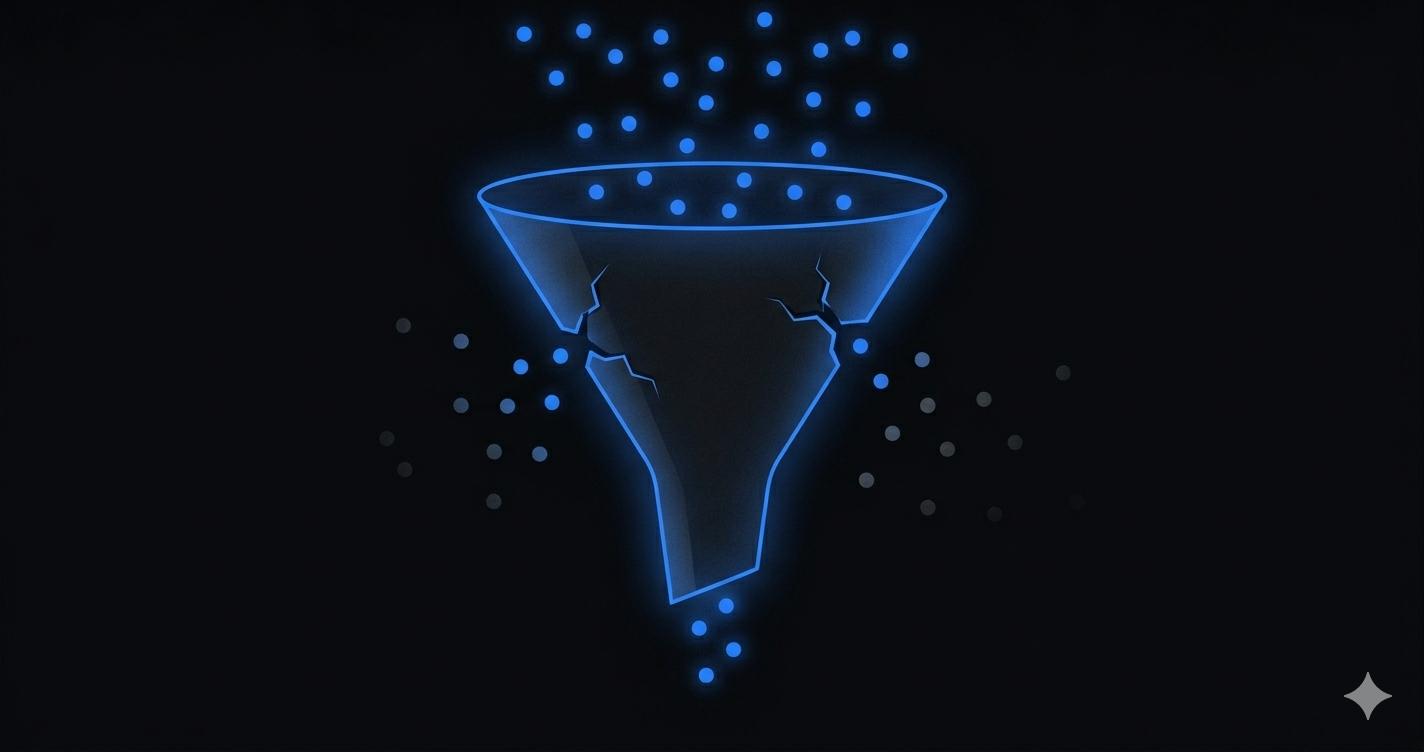
Most service business owners know they miss some leads. Few have sat down and calculated the actual number.
Here is a straightforward estimate.
Say you receive 50 inbound enquiries per month. A significant portion of those come in after hours or during job sites, periods when you cannot respond within the hour. Even at a conservative 30% conversion rate on fast-followed leads, with an average job value of $800, recovering just 10 leads per month adds $8,000 in revenue that was already standing at your door.
At a $1,200 average job value, that is $12,000.
That is not a marketing problem. That is a follow-up gap. And it compounds every single month you do not close it.
Use the free lead score quiz to calculate a specific estimate for your business based on your enquiry volume and average job value.
Why the Problem Is Getting Worse
There is one more factor most business owners are not accounting for: buyer patience is shrinking every year.
People now expect fast responses by default. Same-day delivery. Instant quotes. Chat replies in minutes. When a homeowner submits an enquiry and waits four hours for a response, the contrast with their other digital experiences is jarring.
This is not a cultural observation. It is a competitive fact. The service businesses investing in instant response systems are capturing leads that slower competitors are losing. That gap widens every year.
Your leads are not becoming lower quality. Your competitors are simply getting faster.
How to Stop Leads Going Cold
Closing the response gap does not require hiring more staff. It requires a system that responds when you cannot.
A working lead follow-up system has four components.
Instant response automation. When a lead submits a form or calls and hits voicemail, an automated message fires within seconds. It acknowledges the enquiry, provides a booking link, and stops them from moving to the next result on Google.
Missed call text back. One of the highest-return changes for any service business. When a call goes unanswered, an SMS is sent automatically within seconds: “Sorry we missed you — here is how to book a time this week.” A lead who gets nothing moves on. A lead who gets an instant text at least pauses.
Multi-day follow-up sequence. Most leads do not book on the first contact. A structured sequence reaches out on Day 1, Day 2, Day 4, and Day 7 via SMS and email. No manual effort. Each message gives the lead a reason to re-engage before the Stage 4 cooling-off sets in permanently.
Automated booking. Once a lead is warm, the system offers direct self-booking. Confirmation and reminders go out automatically. No phone tag. No gaps in your calendar from leads who intended to book but never got around to it.
This is how HVAC companies, real estate teams, and med spas convert leads that used to fall through the cracks, not by working harder on follow-up, but by installing a system that does it for them.
If you want to see how a done-for-you version would work for your specific business, book a free 15-minute strategy call.
Frequently Asked Questions
What does it mean when a lead goes cold?
A lead goes cold when the window of intent between their initial enquiry and your response closes without contact. Once a prospect has been unresponsive for more than 24 to 48 hours, the original urgency has usually faded or been resolved by a competitor. Cold leads are not impossible to recover, but the effort required increases significantly after the first hour.
How quickly do leads go cold?
The window begins closing within minutes. Research published in the Harvard Business Review, based on 100,000 sales interactions, found that companies responding within one hour are nearly 7 times more likely to qualify a lead than those who wait even an hour longer. After 24 hours, the likelihood drops 60 times compared to an hour-one response. For urgent service enquiries, the practical window is often 5 to 15 minutes.
Why do leads stop responding after showing interest?
The most common reason is that they found someone else first. For urgent enquiries, the first business to respond often wins the booking before competitors even see the lead. Other causes include urgency fading naturally over 24 to 72 hours, daily life interrupting the decision process, and receiving no follow-up after the initial contact. A consistent multi-day follow-up sequence is the most effective way to re-engage before the lead disappears entirely.
Does automated follow-up actually work?
Yes, when written correctly. Automated messages that feel personal, reference the original enquiry, and arrive quickly read as attentive and professional. Buyers do not care whether a message was triggered manually or by a system. They care that someone responded quickly. An instant SMS acknowledging a missed call has a higher chance of keeping the lead engaged than a manual callback that comes through three hours later.
How do I know how many leads I am losing?
Most business owners underestimate this number significantly. Take your monthly inbound enquiries and estimate how many arrive after hours or during periods when you cannot respond within the hour. Multiply by your average conversion rate and job value. That is your rough monthly revenue leak estimate. Use the free lead score quiz to get a more specific number based on your actual business inputs.
The Bottom Line
Leads do not go cold because your product is wrong or your price is too high.
They go cold because the window of intent closes before you respond.
The businesses converting the most leads from the same pool of enquiries are not the ones with the best marketing. They are the ones with the fastest, most consistent follow-up systems.
Take the free lead score quiz to see exactly how much your current response gap is costing you each month. It takes less than 3 minutes.
Riyaz Rangrage is the founder of Zanor Digital, a done-for-you lead automation agency for local service businesses. Zanor Digital builds and manages lead response and booking systems for trades companies, real estate teams, and appointment-based businesses.
Ready to grow?
Find the right system for your service business.
Take our 3-minute quiz and we'll match you with the right package based on where your business is right now.